Gene Therapy Engineer Lijia Ma Speaks at Changping Laboratory on Next-Generation AAV Delivery and Payload Design
2025-11-30
Dr. Lijia Ma of Westlake University delivered a talk at Changping Laboratory on November 28, 2025, on delivery systems and payload structure modification technologies for next-generation in vivo gene and cell therapy. The seminar, titled "Engineering the Delivery and Payload Architecture for Next-Generation In Vivo Gene and Cell Therapy," was hosted by Deputy Laboratory Director Feng Shao.
About the Speaker
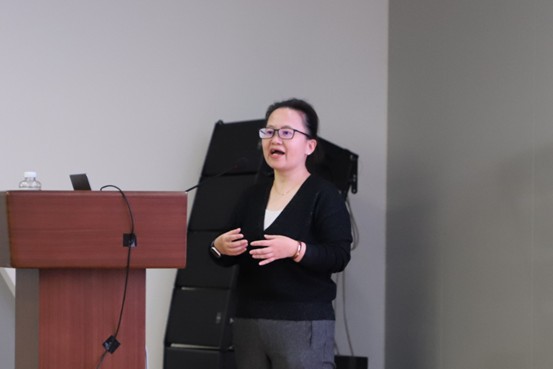
Lijia Ma is a Distinguished Principal Investigator at the School of Life Sciences, Westlake University. Her research focuses on gene regulation, genomic engineering, and the development of novel therapeutic technologies. She is also the founder of Westlake Cloud Valley Biopharma, where she has built an AI-driven platform for next-generation gene and cell therapy technologies.
Why It Matters
Gene and cell therapies offer new hope for many diseases, but delivery remains the core bottleneck limiting their efficacy, safety, and clinical translation. Adeno-associated virus (AAV) is a widely used delivery vector and features in several FDA-approved drugs, but it still has shortcomings including insufficient targeting specificity and low screening efficiency.
What She Talked About
Dr. Ma described the natural structure of AAV and identified the key regions that govern tissue-specific targeting. Her team integrated high-throughput evolution platforms with deep learning to screen a range of AAV mutants.
One mutant, the T-cell-targeted AAV-TCE 001, mediated nearly 70% CAR-T cell generation in humanized mouse models, efficiently cleared B cells, and reduced off-target liver delivery by more than a hundredfold. The team also redesigned therapeutic payloads using ultra-compact DNA editors and streamlined tissue-specific enhancers. One result, AAV-CNS 001, can cross the blood-brain barrier and improved CNS delivery efficiency by 3.4 to 34.1 fold.
These vectors have demonstrated significant efficacy in disease models for systemic lupus erythematosus and leukemia. Together, the delivery systems and therapeutic payloads form a solid technical foundation, providing strong support for developing safer, more precise, and more broadly applicable in vivo gene and cell therapies.
Q&A
The seminar drew scientists, researchers, and students working in oncology and immunology, brain science, and artificial intelligence. In the discussion that followed, Dr. Ma and the audience explored topics including the technical details and future outlook of drug delivery systems, and the safety and immunogenicity of therapeutic vector injections.
The Changping Laboratory Academic Seminar Series brings leading scientists from China and abroad to the Laboratory for focused talks on topics at the frontier of life science research. The series provides a high-level platform for regular academic exchange, supporting the Laboratory's effort to build a world-class hub for life science innovation.