World Alzheimer’s Day | Join Changping Laboratory on a 120-Year Scientific Journey Changping Laboratory
2026-09-21
Today marks World Alzheimer’s Day. In 1906, German physician Alois Alzheimer publicly reported the characteristic pathological changes observed in the brain tissue of a patient with what would later become known as Alzheimer’s disease (AD). In the decades that followed, this devastating disorder—marked by progressive memory loss, language difficulties, impaired judgment, emotional and behavioral changes, and, ultimately, loss of independence—gradually entered public awareness.
One hundred and twenty years later, Alzheimer’s disease has become a major global public health challenge. More than 10 million people in China are living with the disease, accounting for nearly one-third of the global total.
On October 24–25, 2026, Changping Laboratory will host the “Alzheimer’s Disease 120 Years” International Symposium.
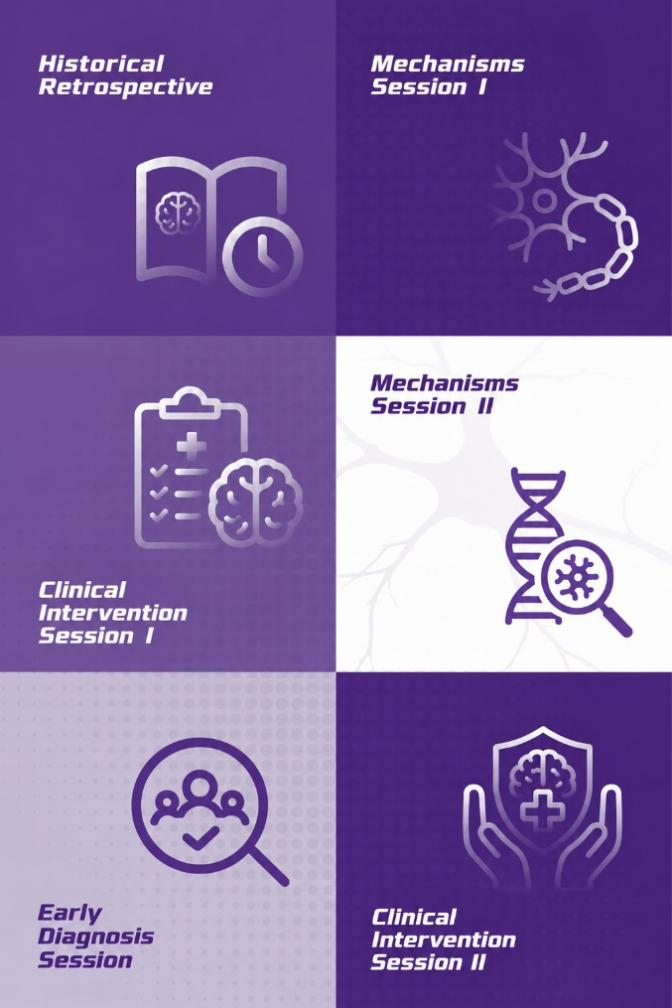
The symposium will look back on 120 years of progress in Alzheimer’s disease research—from early pathological observations to advances in molecular mechanisms, early diagnosis, intervention, and prevention. Leading scientists who have made major contributions to the field will gather to discuss new approaches and emerging breakthroughs in the diagnosis and treatment of Alzheimer’s disease.
PART 01
Scientist Interviews
Xiaoliang Sunney Xie, Member of the Chinese Academy of Sciences and Director of Changping Laboratory, noted that Changping Laboratory has identified cancer and neurodegenerative diseases as two key areas of aging-related disease research. He expressed hope that the symposium would bring together leading experts from China and abroad to exchange insights, deepen understanding of disease mechanisms, and explore new approaches to the prevention and treatment of Alzheimer’s disease.
Lei Liu, Leading Scientist at Changping Laboratory and one of the co-initiators of the symposium, reflected on the 120-year evolution of Alzheimer’s disease research.
Over the past century, the field has moved from describing the disease to understanding its underlying biology; from focusing on plaques and tangles to understanding a complex disease process shaped by genetics, cell types, immunity, metabolism, and brain networks. At the same time, research is increasingly shifting toward earlier diagnosis and intervention—before irreversible neuronal damage occurs.
This shift toward earlier diagnosis and intervention is also a central theme of the upcoming symposium.
PART 02
Symposium Information
Dates:
October 24–25, 2026
Organizer:
Changping Laboratory
Co-organizer:
Leading Group for Education, Science, Technology and Talent Work of Changping District
Co-initiators:
Hesheng Liu, Xiaoqun Wang, Lei Liu, Xiaoliang Sunney Xie

PART 03
Program

PART 04
Registration
Students, researchers, and professionals from academia and industry are warmly invited to attend.(Registration closes on October 15, 2026.)
Please scan the QR code below to register and access information on transportation, accommodation, and other meeting arrangements.

As a national research institution at the forefront of biotechnology, Changping Laboratory hopes the symposium will provide a platform for in-depth scientific exchange, strengthen connections among researchers in China and abroad, and foster new ideas and collaborations.
More interviews with leading scientists in Alzheimer’s disease research, together with further symposium updates, will be released soon.