Epigenetics Researcher Qing Lu Speaks at Changping Laboratory on Brain Repair and Cancer
2025-12-28
Professor Qing Lu of Cincinnati Children's Hospital Medical Center delivered a talk at Changping Laboratory on December 26, 2025, on the role of epigenetic reprogramming in brain repair and tumor formation. The seminar, titled "Epigenetic Reprogramming in Brain Repair and Oncogenesis," was hosted by Deputy Laboratory Director Feng Shao.
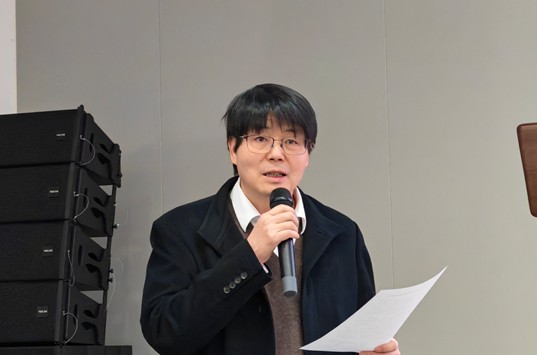
About the Speaker
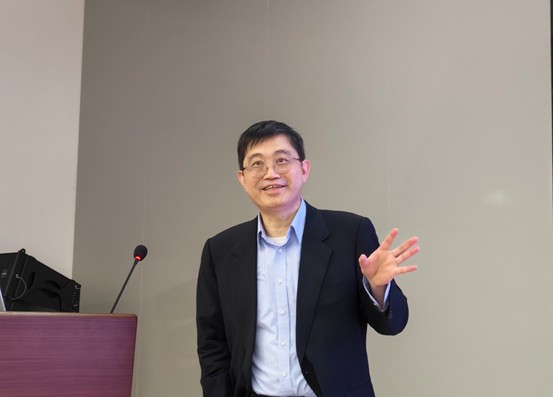
Qing Lu is Scientific Director of the Brain Tumor Center and the Beatrice C. Lampkin Chair in Cancer Epigenetics at Cincinnati Children's Hospital Medical Center. He completed his postdoctoral training at the Dana-Farber Cancer Institute and Harvard Medical School, and subsequently held positions at the University of Texas Southwestern Medical Center and Cincinnati Children's. His research focuses on neurological conditions including demyelinating diseases and autism spectrum disorders, as well as the mechanisms of brain tumorigenesis.
Why It Matters
Epigenetic regulation is a core determinant of cell identity in the central nervous system. It governs cell lineage specification, plasticity, and long-term functional stability, shaping both tissue growth during normal brain development and myelin repair after injury. When these epigenetic controls are abnormally activated or disrupted, they may drive tumor formation.
What He Talked About
Professor Lu began with the key role of glial cells in neurological disease. Myelinating cells, which differentiate from oligodendrocyte precursor cells, ensure rapid neural transmission and retain the capacity to regenerate.
He then described his discovery that two key transcription factors, Olig1 and Olig2, play a decisive role in oligodendrocyte lineage development, motor neuron formation, and the initiation and progression of gliomas.
Turning to the relationship between epigenetic regulation and myelin regeneration, Professor Lu explained that epigenetic patterns can shift in response to environmental changes and genetic mutations, impairing the regenerative capacity of myelinating cells. His team identified a compound, ESI1, through screening that can overcome this impairment. In mouse models, ESI1 increased myelin production. In spinal cord injury models, it restored neurological function. And in FAD (familial Alzheimer's disease) mice, it showed therapeutic effects on degenerative lesions and promoted injury recovery.
Professor Lu also discussed the characteristics and mechanisms of pediatric brain tumors, as well as the use of AI in cancer research. He emphasized that understanding the shared and distinct epigenetic mechanisms underlying both neural regeneration and tumor formation is essential to designing next-generation treatments for brain disorders.
Q&A
The seminar drew scientists, researchers, and students from across the Laboratory's research programs in brain and neurodegenerative disease, oncology and immunotherapy, and AI and emerging technologies. In the discussion that followed, the audience and Professor Lu explored topics including the cellular origins of gliomas, key drivers of brain tumorigenesis, glioblastoma models and individual variability, and the link between myelin loss and neurodegenerative disease.
The Changping Laboratory Academic Seminar Series brings leading scientists from China and abroad to the Laboratory for focused talks on topics at the frontier of life science research. The series provides a high-level platform for regular academic exchange, supporting the Laboratory's effort to build a world-class hub for life science innovation.