Seminar | Restoring Cellular Identity and Reversing Disease through Partial Reprogramming
2026-04-30
Juan Carlos Izpisua Belmonte
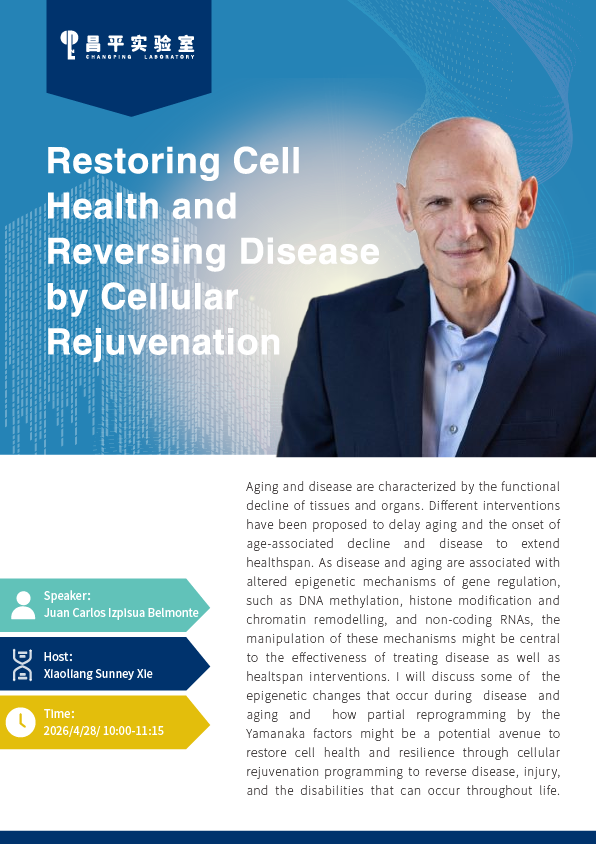
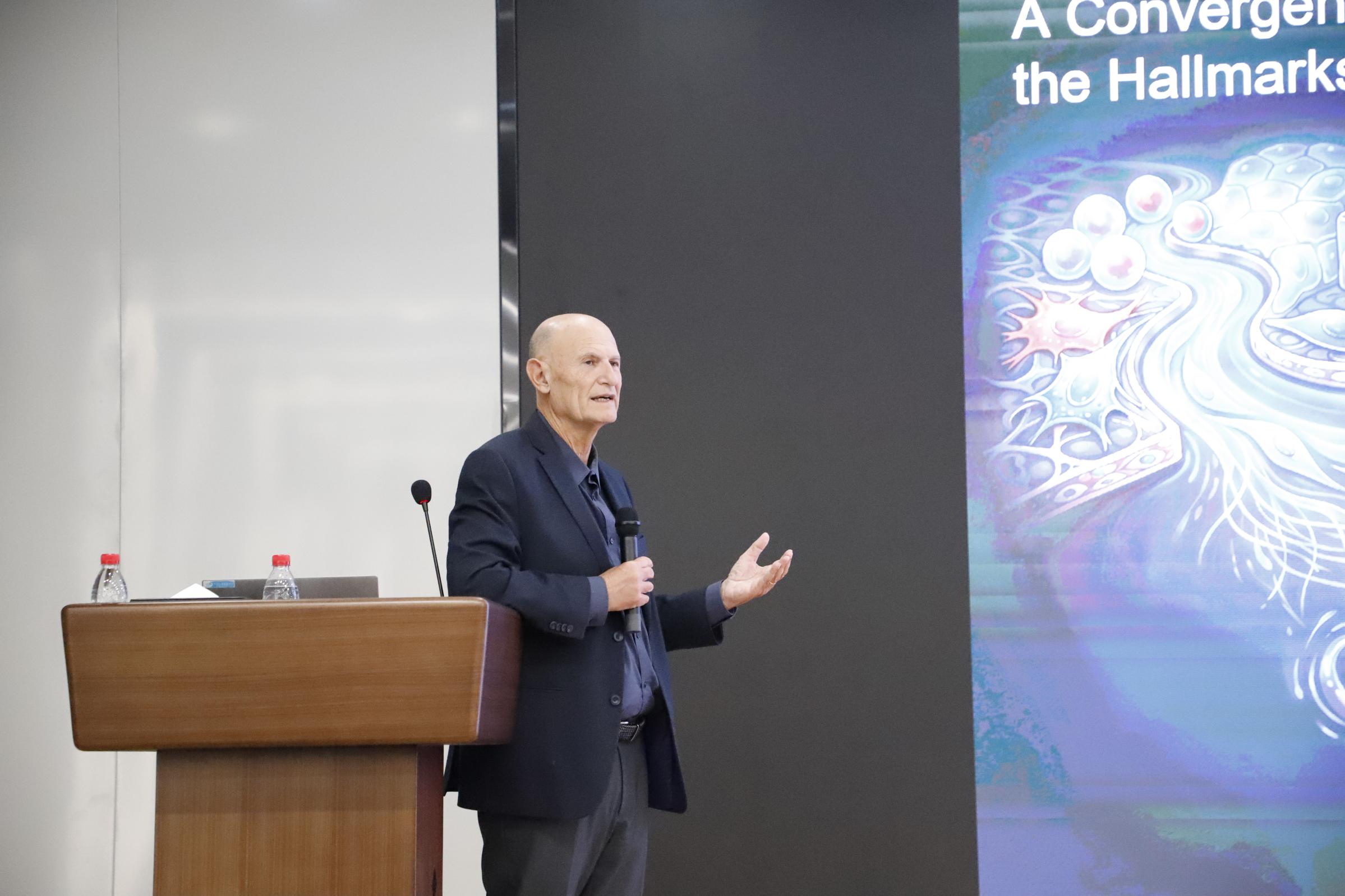
On April 28, 2026, Dr. Juan Carlos Izpisua Belmonte from Altos Laboratory presented “Restoring Cellular Identity and Reversing Disease through Partial Reprogramming.” The talk explored emerging strategies to combat aging by restoring cellular identity.
Dr. Belmonte reported a novel perspective on aging as a process driven by the gradual loss of cellular identity rather than the accumulation of damage. He highlighted the role of epithelial–mesenchymal transition (EMT) drift as an early and measurable feature of this decline, observable even in otherwise healthy cells.
The seminar also showcased advances in partial cellular reprogramming using Yamanaka factors. Transient induction of these factors has been shown to rejuvenate aged cells, improve organ function, and extend lifespan in preclinical models. In addition, Dr. Belmonte discussed the potential of ex vivo organ reprogramming to enhance donor organ quality, offering a possible solution to transplant shortages.
Dr. Belmonte concluded by emphasizing that, while such therapies are still under development, lifestyle interventions—such as caloric restriction and regular exercise—remain effective tools for promoting cellular health. The ultimate goal, he noted, is to extend healthspan and maintain functional vitality throughout life.
About the speaker
Juan Carlos Izpisua Belmonte is the Founding Scientist at Altos Labs, where he leads transformative research into cellular health and rejuvenation. A world-renowned pioneer in regenerative medicine and formerly the Roger Guillemin Chair at the Salk Institute, Dr. Belmonte has dedicated his career to uncovering the molecular mechanisms of embryogenesis and cellular plasticity. At Altos Labs, he is currently spearheading the development of technologies to reprogram adult and diseased cells to return to the resilient, healthy states observed in early life. His vision is to translate these biological insights into universal health therapeutics capable of reversing age-related decline and overcoming human disease.